Observability Cost Reduction: Key Drivers, Challenges & Best Practices



Part of the purpose of observability is to help businesses save money by identifying underutilized resources. Effective observability can also boost revenue by improving the end-user experience.
However, there’s no guarantee that observability will save you money. In fact, poorly designed observability strategies can do the opposite by wasting money due to issues like excess storage consumption for logs or high compute costs when collecting observability data. The key to mitigating these issues is observability cost reduction - a practice that helps streamline observability costs without compromising on a business’s ability to collect the insights it requires.
Read on for details as we explain how observability cost reduction works, why it’s important, and how best to reduce observability costs without sacrificing visibility.
What is observability cost reduction?
Observability cost reduction is the process of minimizing the financial impact of observability processes.
In other words, when you reduce observability costs, you find ways to optimize the amount of money you spend collecting and working with observability data.
Examples of strategies for reducing observability costs include:
- Decreasing the amount of logs, metrics, and traces you collect. Since there is a cost associated with collecting and storing each data point, less data collection translates to less money.
- Reducing observability data retention periods. This saves money by cutting back on storage costs.
- Improving the efficiency of data correlation and root cause analysis. The faster you can complete these processes, the less you will typically spend on observability compute costs.
We’ll dive deeper into ways to cut observability spending later in the article.
Common causes of high observability costs
Observability practices vary widely, and financial waste can come in many forms. But as typical examples of reasons why an organization might be wasting money on observability, consider the following:
- Collecting more data than necessary.
- Collecting redundant data.
- Storing data longer than necessary.
- Storing data inefficiently by failing to take advantage of opportunities to compress or restructure it.
- Missing out on low-cost data storage opportunities (like “cold” cloud storage tiers for archived logs).
- Deploying (and paying for) more observability tools than necessary.
- Choosing cost-inefficient pricing models for observability tools (by, for instance, paying for a higher amount of data ingestion than the organization actually uses).
- Importing or exporting excessive amounts of data between observability tools (in cases where the business is billed based on data import or export rates).
| Cause | How it impacts costs |
|---|---|
| Collecting unnecessary data | Teams pay more for the cost of collecting and storing data, even when they don’t need it |
| Collecting redundant data | Teams may collect the same data twice |
| Storing data longer than necessary | Excess data retention bloats storage costs |
| Inefficient data storage | Teams use more storage space than necessary by failing to optimize data usage (for example, by compressing it or removing redundant information) before storing it |
| Unoptimized data storage | Higher-cost storage increases spending without a corresponding increase in observability effectiveness |
| Unnecessary observability tools | More tools mean higher licensing costs, as well as more data movement (and tools may charge for data movement) |
| Cost-inefficient pricing models | Businesses may pay for features they don’t use |
| Excess data movement | Observability tools often bill for the amount of data ingested, and unnecessary ingestion leads to higher costs without enabling better observability |
Metrics, logs, and traces: Balancing visibility and cost
While it’s important to keep observability spending in check, it’s equally critical to make sure that your observability tools and processes deliver the insights you need to identify and mitigate performance risks. Observability cost optimization should never come at the expense of IT performance.
Hence the importance of balancing visibility with observability cost reduction. In general, the goal during cost reduction operations should be to ensure that the metrics, logs, and traces you collect (as well as the tools you use to collect and analyze them) result in meaningful visibility - and that you avoid collecting data that is not impactful. The point is to make observability more cost-effective, not to reduce costs in ways that also reduce visibility.
Sampling, retention, and data volume: Strategies for observability cost reduction
| Strategy | How it reduces observability costs |
|---|---|
| Sampling | Reduces the total volume of data collected by collecting only a portion of available data |
| Data retention optimization | Reduces storage costs by retaining data only for the period necessary |
| Data volume optimization | Reduces storage costs by reducing the cost of underlying storage resources |
At a high level, there are three key types of strategies that can boost observability outcomes without reducing visibility. Here’s a look at each one, along with examples of how to put it into practice.
1. Sampling
Sampling means collecting only a certain portion (or sampling) of data, as opposed to collecting all available data points. For example, sampling might involve:
- Polling a server’s CPU usage every minute rather than collecting these metrics continuously.
- Logging 20 percent of all application events instead of logging each one.
- Monitoring resource utilization rates for half of the Pods in a Kubernetes cluster instead of every Pod.
Sampling helps save money because it reduces the amount of data that observability pipelines and tools need to ingest, analyze, and retain. Those processes require infrastructure, and infrastructure costs money, so the less data you are working with, the lower your infrastructure spending will typically be.
The caveat, of course, is that sampling also increases the risk that you’ll miss key information because it wasn’t included in the subset of sampled data that you’re working with. Thus, it’s important to ensure that you only use sampling when observing resources whose state can be adequately inferred based on sampled data. Systems where anomalies or outliers occur frequently, for example, are not good candidates for sampling.
2. Data retention optimization
Data retention refers to how long an organization keeps data on hand. Typically, teams define data retention policies, which state the period of time for which they’ll store data before deleting it.
Common ways to optimize data retention include:
- Defining different retention policies for different types of data; for instance, you might retain observability data for production apps longer than for experimental ones.
- Aligning retention policies with business goals. Rather than simply keeping data for X number of months, determine which business reasons (such as compliance rules that may require log files to be kept on hand for a certain period) impact retention, then implement retention policies accordingly.
In general, the main goal of observability data retention optimization is to avoid storing data any longer than necessary, while at the same time ensuring that you don’t delete data when you may still need it (as you might if, for example, you want to compare historical performance trends with current ones).
3. Data volume optimization
Data volumes are resources that store data persistently. In the context of observability cost reduction, data volumes are important because there are many ways to configure data volumes, and the costs of these approaches can vary widely.
Common strategies for reducing the costs of data volumes include:
- Using pay-as-you-go storage resources: This avoids the cost of paying for storage capacity that you’re not actively consuming.
- Moving data to lower-cost types of storage: For example, most cloud-based object storage services offer “hot,” “cold”, and “glacial” storage tiers. The “colder” tiers cost less per gigabyte, with the caveat that data may not be immediately available. This is usually OK for storing data like logs you’ve already analyzed, so taking advantage of lower-cost storage can be a way to cut back on data volume costs.
- Identifying and deleting data volumes that are no longer attached to active workloads.
Similar to data retention strategies, the main goal of data volume optimization is to avoid paying for storage you’re not using or don’t need, while also making sure you don’t pay more per gigabyte for storage than your performance objectives mandate.
Observability cost reduction without losing debugging and incident context
As we mentioned, it’s critical to balance visibility with observability cost optimization. You want to ensure that you collect and retain the data you need to debug issues and understand performance context, while also not overpaying for compute or storage resources.
To this end, it’s helpful to ask yourself the following questions when deciding if and how to collect and analyze data:
- Does the analysis of this data serve a concrete business goal (like optimizing application performance)? If not, why are we collecting it?
- Is there a way to achieve the business goal without collecting as much data, or without storing it for as long?
- How does the data collection process work, and are we taking advantage of all opportunities to optimize it?
- How does data move between observability tools, and are there ways to reduce the volume of data that migrates from one tool to another?
- If we stopped collecting X type of data - or if we sampled it or retained it for a shorter period of time - what impact would it have on our business goals?
In short, a cost-effective observability strategy is one where data collection, analysis, and integration processes align with business goals. If you collect or store data just to have it on hand, you’re probably wasting money. But if there is a clear performance- or reliability-related reason to work with data, then you can justify collecting it (although even in that case, there may be ways to get the data more cost-effectively).
Observability cost reduction challenges in Kubernetes and microservices
Cutting down on observability costs can be tough in any context due to the complex types of data at stake and the many ways in which observability data is used. But special observability cost reduction challenges arise when working with Kubernetes and microservices, including:
- Having more data to collect, due to the many Kubernetes components and application microservices you need to observe.
- Diversity in the way Kubernetes resources and applications expose data. For example, not all containers store logs in the same place. This makes it tougher to standardize and cost-optimize data collection policies.
- Frequent changes in workload scale, which can make it difficult to predict how often to sample data and how long to retain data.
- Lack of native tooling in Kubernetes for estimating the cost of observability. You can map observability processes onto costs, but doing so requires the ability to know how many resources you’re expending on data collection and retention, then figuring out how much those resources cost. Kubernetes doesn’t do this for you.
Best practices for sustainable observability cost reduction
| Practice | How it helps |
|---|---|
| Align observability with business goals | Helps ensure that teams don’t collect or retain observability data for no reason |
| Make observability granular | Aligns observability policies with the specific needs of individual workloads |
| Implement observability cost monitoring | Provides insight into what observability processes currently cost |
| Consolidate observability tooling | Reduces the cost of tool licenses, as well as data ingestion fees |
| Optimize infrastructure costs | Lowers the cost of underlying data collection and storage infrastructure |
The following best practices can help achieve an optimal balance between observability effectiveness and cost:
- Align observability practices with business goals: As noted above, it’s important to ensure that the data you collect supports a business priority. Otherwise, collecting and storing it is likely a waste of money.
- Make observability granular: Not all workloads require the same types of data collection. Nor do they need the same data collection frequency or retention periods. For this reason, implementing granular policies can reduce costs without skimping on visibility requirements.
- Implementing observability cost monitoring: It’s hard to optimize what you can’t see. Implement controls to monitor how many resources your observability processes are consuming (by, for example, tracking the CPU usage of observability tools), then calculate the corresponding infrastructure costs.
- Consolidate observability tooling: Generally speaking, having fewer tools will reduce observability costs - not just because it means fewer tools to pay for, but also because it can reduce the amount of data that flows between tools (which matters from a cost perspective because some tool vendors charge based, at least in part, on how much data the tools ingest).
- Optimize infrastructure costs: Reducing the cost of underlying compute and storage infrastructure helps to cut observability spending across the board (even if your observability practices are sub-optimal). To this end, consider taking advantage of infrastructure savings opportunities like reserved instances for cloud servers and lower-cost object storage tiers.
How observability architecture impacts long-term cost reduction
While tweaking specific parts of your observability processes (such as deciding to sample a certain type of metric) is one way to cut observability costs, changes to your observability architecture (meaning the set of tools and pipelines you use to collect and analyze data) is also critical. Indeed, optimizing your observability architecture is one of the simplest ways to achieve across-the-board spending cuts, even if individual data collection processes are not optimized.
From an architectural perspective, the most important considerations to weigh include:
- How many tools you use - as noted above, more tools often translate to higher costs.
- Whether there are redundancies in your observability pipelines because you’re collecting the same types of data more than once. If so, modifying pipeline design will save money.
- How you move data between sources and destinations. More movement generally means more spending.
Observability cost reduction with unified, eBPF-based visibility by groundcover
Speaking of simple changes that can result in major observability cost savings across the board, groundcover excels in this area in two key ways:
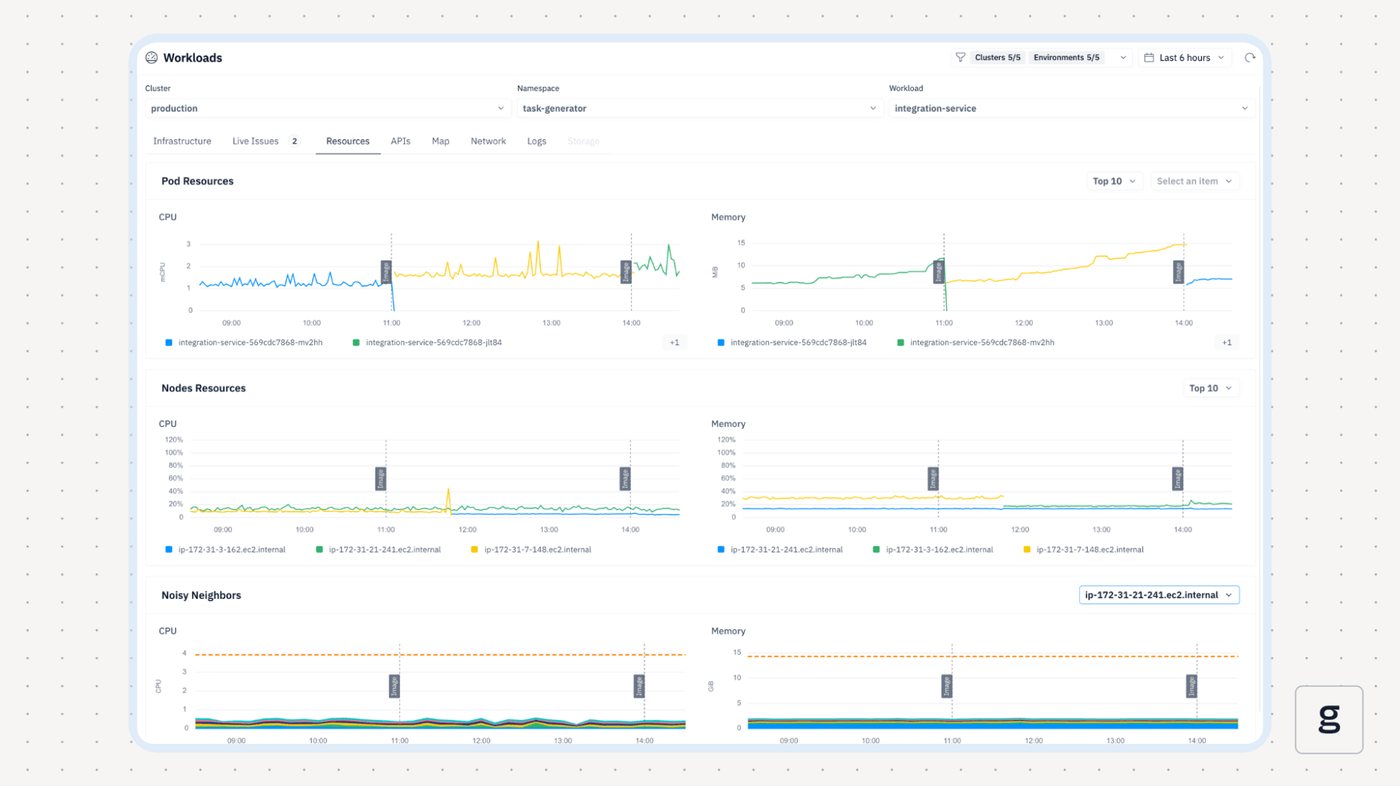
- groundcover can use eBPF to collect data. Because eBPF pulls data directly from the Linux kernel, it typically uses a tiny fraction of the CPU of traditional observability tools. Think of eBPF as a “cheat code” that lets you capture all of the observability data you need, but at a much lower cost.
- As a comprehensive observability platform that can collect, analyze, and store observability data in a highly granular fashion, groundcover helps to simplify and centralize observability strategies, which in turn reduces costs by eliminating the need to implement expensive observability pipelines that bloat budgets due to high tool and data ingestion costs.
More observability for less
Observability can be expensive - but it doesn’t have to be. By optimizing how you collect and store logs, metrics, and traces, it’s possible to optimize observability spending while still retaining high visibility and analytic capabilities. The key is to avoid paying for observability that you’re not using, while also implementing “under the hood” changes (like switching to eBPF) that can drastically reduce observability costs while still providing access to all of the data you need.
FAQs
The best way to reduce observability costs without compromising on troubleshooting speed and capabilities is to avoid unnecessary data usage, while still retaining the data that drives crucial insights. To do this, teams need to assess which observability data they actually use, while also determining whether practices like sampling will provide the insights they require - something that can vary on a workload-by-workload basis.
In general, teams should prioritize observability data that supports business goals, such as maintaining a certain level of application performance. Other data can be ignored or collected less frequently.
Groundcover reduces observability costs in two key ways. First, it uses eBPF - a hyper-efficient framework that collects data with minimal resource usage - to capture observability data at the source. Second, as a comprehensive observability platform, groundcover consolidates observability architectures and allows teams to avoid the high cost of having to implement a host of observability point tools and move data constantly between them.