Vulnerability Scanning in Kubernetes: Key Risks, Methods & Best Practices



Kubernetes can automatically do many things, like schedule Pods on nodes or restart failed Pods. One thing Kubernetes can’t do – at least not on its own – is scan for vulnerabilities. Kubernetes itself offers no built-in tooling for detecting security risks.
With some help from external tools, however, it’s possible to implement vulnerability scanning for Kubernetes. Doing so is also crucial for any organization aiming to stay a step ahead of Kubernetes security risks.
Read on for details as we explain what Kubernetes vulnerability scanning means, how it works, which types of risks it can uncover, and security best practices for making the most of vulnerability scans in a Kubernetes environment.
What is vulnerability scanning in Kubernetes?
Vulnerability scanning in Kubernetes is the process of identifying known security vulnerabilities across the various components that comprise a Kubernetes environment – including container images, Pods, nodes, Kubernetes configuration data and network resources. The goal is to discover vulnerabilities before attackers can exploit them and to provide organizations with actionable insights for remediation.
A security vulnerability is any type of flaw within a software system that attackers could exploit to gain access to the system, steal data, disrupt services, or cause other types of harm. For example, a containerized application that doesn’t validate input properly due to coding oversights could be vulnerable to code injection, a type of attack that involves feeding malicious inputs into applications to manipulate them. Or, the container runtime (the software responsible for executing containers) that is installed on a Kubernetes node could be subject to a buffer overflow vulnerability, providing attackers a means of manipulating the server’s memory to take control of containers.
Effective Kubernetes vulnerability scanning detects risks like these. In turn, it helps security and DevOps teams maintain visibility into their environments, reduce attack surfaces and support compliance requirements. By continuously assessing workloads throughout their lifecycle, organizations can identify vulnerabilities early and prevent them from reaching production environments.
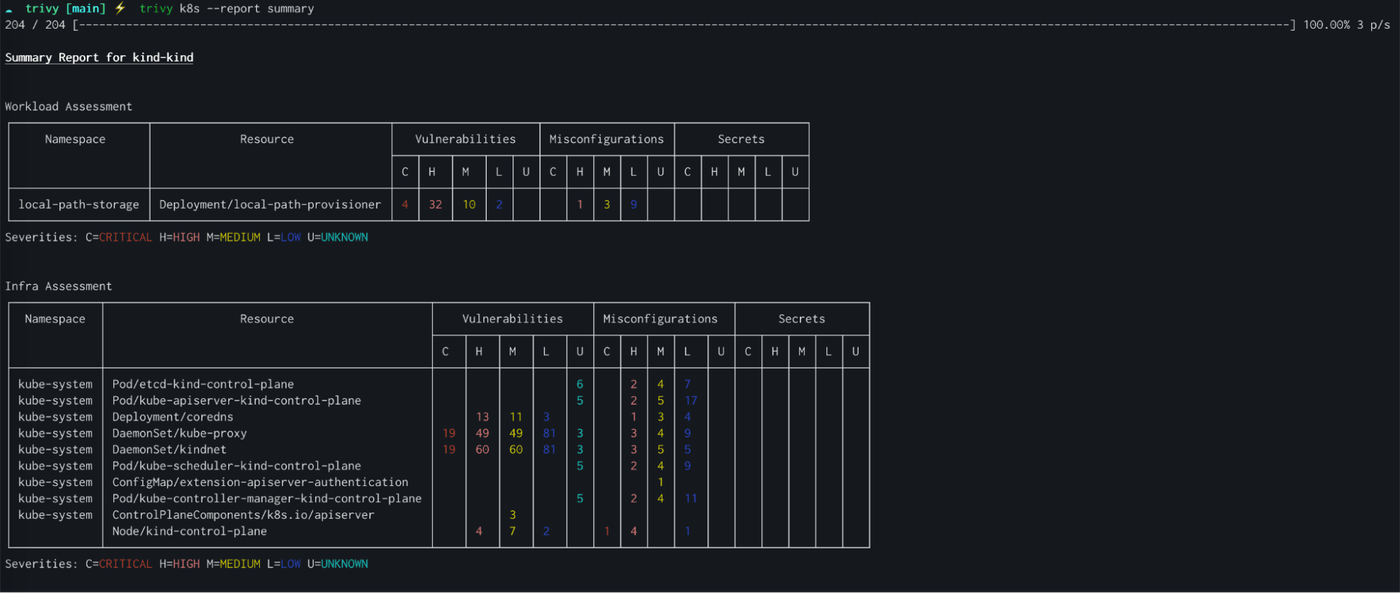
Types of vulnerabilities in Kubernetes environments
We touched on common types of vulnerabilities that may exist in a Kubernetes environment above, but here’s a more detailed look:
- Container image vulnerabilities: Container images may include vulnerable components such as outdated operating system packages, insecure libraries, or software that is subject to known Common Vulnerabilities and Exposures (CVEs). If Kubernetes deploys Pods that include containers created using vulnerable images, threat actors could attack the containers.
- Kubernetes configuration vulnerabilities: Insecure settings within manifests, deployments, or other Kubernetes configuration data could lead to attack. Examples of insecure settings include excessive container privileges, unrestricted network access, and overly permissive Role-Based Access Control (RBAC) configurations.
- Node vulnerabilities: The operating systems running on the nodes within a Kubernetes environment could be subject to vulnerabilities, especially if the systems are not patched regularly.
- Runtime vulnerabilities: Runtime vulnerabilities result from flaws within container runtime software (which, as noted above, is the software that executes containers). By exploiting these vulnerabilities, attackers could potentially manipulate the way containers run, exfiltrate sensitive data, or even take control of host servers.
| Type of scanning | Purpose |
|---|---|
| Container image vulnerability scanning | Analyzes the contents of container images for insecure components and dependencies. |
| Kubernetes configuration vulnerability scanning | Assess Kubernetes configurations for risks such as insecure access controls. |
| Node vulnerability scanning | Analyzes node operating system and application code for security vulnerabilities. |
| Runtime software vulnerability scanning | Checks container runtime software for security flaws. |
How vulnerability scanning in Kubernetes works
Kubernetes vulnerability scanning combines multiple scanning techniques to assess different layers of the environment. The process typically includes the following steps:
- Asset discovery: First, the organization documents which resources (such as container images, Kubernetes infrastructure components and configuration data) exist within Kubernetes. This is important because it’s necessary to have an inventory of assets to scan before scanning can begin.
- Container image scanning: Automated container images scanners inspect container layers to identify vulnerable operating system packages and software components. They typically do this by comparing the contents of the container images to vulnerability databases (such as the National Vulnerability Database, or NVD), which document publicly known security vulnerabilities.
- SCA scans: Another type of tool, called software composition analysis (SCA) scanners, evaluates application dependencies and libraries to check them for known vulnerabilities. This is valuable because these components are external components that are not included directly within container images, but that could still introduce vulnerabilities when containers run.
- Configuration scans: Configuration scanners analyze Kubernetes manifests, Helm charts, admission policies, and cluster settings to identify misconfigurations that could increase security risks. Examples include privileged containers, unrestricted network policies, and excessive permissions.
- Node scanning: Vulnerability scanners can analyze the software running on Kubernetes nodes to detect vulnerable or unpatched applications or packages.
- Runtime monitoring: Runtime monitoring is the process of monitoring running applications within Kubernetes for unusual behavior, which could be a sign of breaches or attempted breaches. While monitoring is not technically the same thing as scanning because it focuses on assessing live software systems rather than statically scanning code or configurations, it can be a valuable complement to Kubernetes vulnerability scanning.
Vulnerability scanning in Kubernetes across the application lifecycle
Typically, the different types of scans described above take place during varying parts of the application lifecycle (meaning the process that applications go through as they’re developed, deployed, and repeatedly updated). Here’s a look at key types of scans that occur during major phases of the application lifecycle.
Build-time image scanning in Kubernetes
After container images have been built but before containers are deployed, image scans and SCA scans usually take place. They help to detect vulnerable components or dependencies within containers, allowing developers to mitigate them before vulnerable containers begin running.
Registry scanning in Kubernetes
Registry scanning involves scanning images within container registries for vulnerabilities. Images within registries have typically already been approved for deployment (they’re stored in registries because Kubernetes can automatically pull them from registries for deployment), but registry scanning provides another, second chance for detecting vulnerable components and dependencies in container images that initial scans may have missed.
Registry scanning is also important because attackers can sometimes abuse registry access control misconfigurations or vulnerabilities to upload malicious images in place of legitimate ones. Registry scans can help identify when this happens.
Pre-deployment configuration scanning in Kubernetes
When an application has been prepared for deployment through the creation of a manifest, scans of the manifest and related resources (such as config maps or storage volumes) should take place to detect misconfigurations (like overprivileged containers) before the resources go live.
Runtime vulnerability monitoring in Kubernetes
Runtime monitoring is the process of assessing live applications for risks, mainly by checking for anomalous behavior (such as a large volume of requests from an unknown endpoint, which could be a sign of an attempted denial-of-service attack) that provides insight into potential or actual breaches.
The application lifecycle – and, by extension, the scanning process – is usually cyclical: When an application is updated, the scans recur as teams check the updated container image, manifest and other resources for vulnerabilities.
Key components of effective vulnerability scanning in Kubernetes
An effective Kubernetes vulnerability scanning program includes several core capabilities:
- Comprehensive coverage: Organizations should scan all relevant resources – container images, dependencies, infrastructure components, configurations and more – to achieve complete visibility.
- Continuous scanning: Continuous, ongoing scans help to ensure that vulnerabilities are identified as environments change. Because Kubernetes workloads are dynamic, periodic scans alone may miss newly introduced risks.
- Vulnerability intelligence: Insights about how vulnerabilities are exploited and how severe they are are crucial for helping teams root out false positives and determine which vulnerabilities to prioritize.
- Automation: Automation plays a critical role by integrating scanning into development workflows, CI/CD pipelines, and operational processes. In addition, automated remediation recommendations further accelerate response efforts.
| Component | Why it’s valuable |
|---|---|
| Comprehensive coverage | Scans all relevant resources for potential security risks. |
| Continuous scanning | Allows organizations to detect vulnerabilities quickly, even as resources change. |
| Vulnerability intelligence | Provides critical insights for understanding how much of a threat each vulnerability poses. |
| Automation | Keeps scanning processes fast, efficient, and scalable. |
How to prioritize and remediate vulnerabilities in Kubernetes
It’s often the case that vulnerability scans reveal a large number of potential risks. To use resources effectively and efficiently, teams must decide what to prioritize, then mitigate high-priority vulnerabilities.
Vulnerability prioritization factors
The best way to establish priorities is to consider how much harm a given vulnerability could cause within the organization’s Kubernetes environment. Understanding how the vulnerability is exploited is vital in this respect because in many cases, attackers can only take advantage of vulnerabilities if certain configurations are present or other conditions are met. Thus, a vulnerability that is considered severe in general (based on the severity scoring data tracked through public systems like the Common Vulnerability Scoring System, or CVSS) may not actually pose a risk within a specific Kubernetes environment.
It’s also important to consider the business context of vulnerabilities, meaning factors such as the sensitivity level of data processed by a vulnerable application or the amount of harm that the business would experience if a vulnerable application were disrupted by attackers. Engineers should prioritize vulnerabilities that are likely to have the greatest impact on the organization.
Vulnerability remediation process
After determining which vulnerabilities to prioritize, teams must implement remediations.
Typically, the ideal remediation is to fix the underlying flaws within the application or configuration code that trigger a vulnerability. This is not always immediately possible; sometimes (especially in the case of what are known as zero-day vulnerabilities, which attackers begin exploiting before the vulnerabilities are publicly documented) no patch exists to fix the code.
In that case, the organization must either write and apply its own patch, or take other measures (like isolating the vulnerable application from the network to prevent remote attacks) that will reduce or eliminate the risk of a vulnerability being exploited.
Open source and commercial tools for vulnerability scanning in Kubernetes
The Kubernetes ecosystem includes numerous vulnerability scanning tools.
Popular open source solutions include Trivy, Grype, Kubescape, kube-bench, and kube-hunter. These tools provide capabilities such as image scanning, dependency analysis, compliance validation, and configuration assessment.
Commercial platforms often expand upon these capabilities by providing centralized management, advanced prioritization, runtime visibility, policy enforcement, and integrated remediation workflows. Examples include solutions from major cloud security and application security vendors that combine vulnerability management with cloud security posture management, workload protection and software supply chain security capabilities.
Keep in mind that open source and commercial vulnerability scanners for Kubernetes don’t have to be an either-or proposition. Organizations can adopt a combination of open source and commercial tools to balance flexibility, coverage, and operational efficiency.
How runtime observability improves vulnerability scanning in Kubernetes
As we mentioned, vulnerability scanning typically involves analyzing static code or configuration data for vulnerabilities. But this practice doesn’t always catch all risks. It’s most effective at detecting vulnerabilities that have already been publicly documented because scanners can compare the contents of an application’s code or configuration to those that are known to pose risks.
Vulnerabilities that have not been publicly documented, however, are much harder to catch through scanning alone. Sometimes, scanners can analyze code logic flows as a way of detecting some types of risks, but this is an imprecise approach that doesn’t guarantee identification of all potential risks, especially within complex codebases.
Fortunately, there’s a way to help fill the gaps of vulnerability scanning: Runtime monitoring and observability. By observing applications during runtime (i.e., when they are actually running), teams can identify unusual patterns or requests that may reveal previously unknown vulnerabilities.
In addition, runtime observability can help organizations set effective priority levels for vulnerabilities by providing insights like how many critical requests an application handles and whether a remediation causes the application’s performance to degrade.
Common challenges in Kubernetes vulnerability scanning
Several challenges can arise in the context of Kubernetes vulnerability scanning:
- Alert fatigue: Large environments may generate thousands of vulnerability findings, overwhelming security teams and making prioritization difficult.
- False positives: False positives, or alerts about vulnerabilities that don’t actually exist or pose a significant risk, can also consume valuable resources. Not every detected vulnerability represents a practical security risk, particularly when vulnerable components are unused or inaccessible.
- Dynamic infrastructure In Kubernetes, containers and workloads are constantly created, modified, and terminated, making it difficult to maintain accurate visibility through periodic scanning alone.
- Fragmented tooling: Tool fragmentation can complicate operations. Different scanners often focus on specific layers of the environment, requiring organizations to aggregate and correlate findings across multiple platforms.
- Remediation bottlenecks: Security teams may identify vulnerabilities faster than development and operations teams can resolve them, creating growing remediation backlogs.
Best practices for vulnerability scanning in Kubernetes environments
To get the most from Kubernetes vulnerability scanning, consider the following best practices:
- Scan continuously: Implement continuous scanning throughout the software development lifecycle rather than relying solely on periodic assessments.
- Integrate with CI/CD processes: Integrate scanning into CI/CD pipelines to identify vulnerabilities before deployment and prevent insecure artifacts from reaching production.
- Scan comprehensively: Combine image, dependency, configuration, infrastructure, and runtime scanning to achieve comprehensive visibility across Kubernetes environments.
- Prioritize risk effectively: Use prioritization methods that incorporate runtime context, exploitability, and business impact rather than relying exclusively on CVSS scores.
- Automate remediation: Automate remediation workflows whenever possible to reduce response times and improve operational efficiency.
- Validate remediations: Continuously validate remediation efforts and monitor environments for newly introduced vulnerabilities.
- Include runtime observability: Leverage runtime observability to focus resources on vulnerabilities that represent genuine exposure rather than theoretical risk.
| Practice | How it helps |
|---|---|
| Scan continuously | Scanning on an ongoing basis detects risks immediately, as they emerge. |
| Integrate with CI/CD | CI/CD integration helps ensure that appropriate scans take place at each critical step of the application development lifecycle. |
| Scan comprehensively | Comprehensive scanning provides coverage of all relevant resources. |
| Prioritize risk effectively | Strategic risk prioritization allows teams to focus remediation efforts where they will have the greatest impact. |
| Automate remediation | Automation helps speed up and scale scanning. |
| Validate remediations | Validation confirms that remediations actually resolved the security issue. |
| Include runtime observability | Runtime observability helps contextualize security risks, while also detecting vulnerabilities that static scanners may have missed. |
Real-time Kubernetes vulnerability scanning without sampling with groundcover
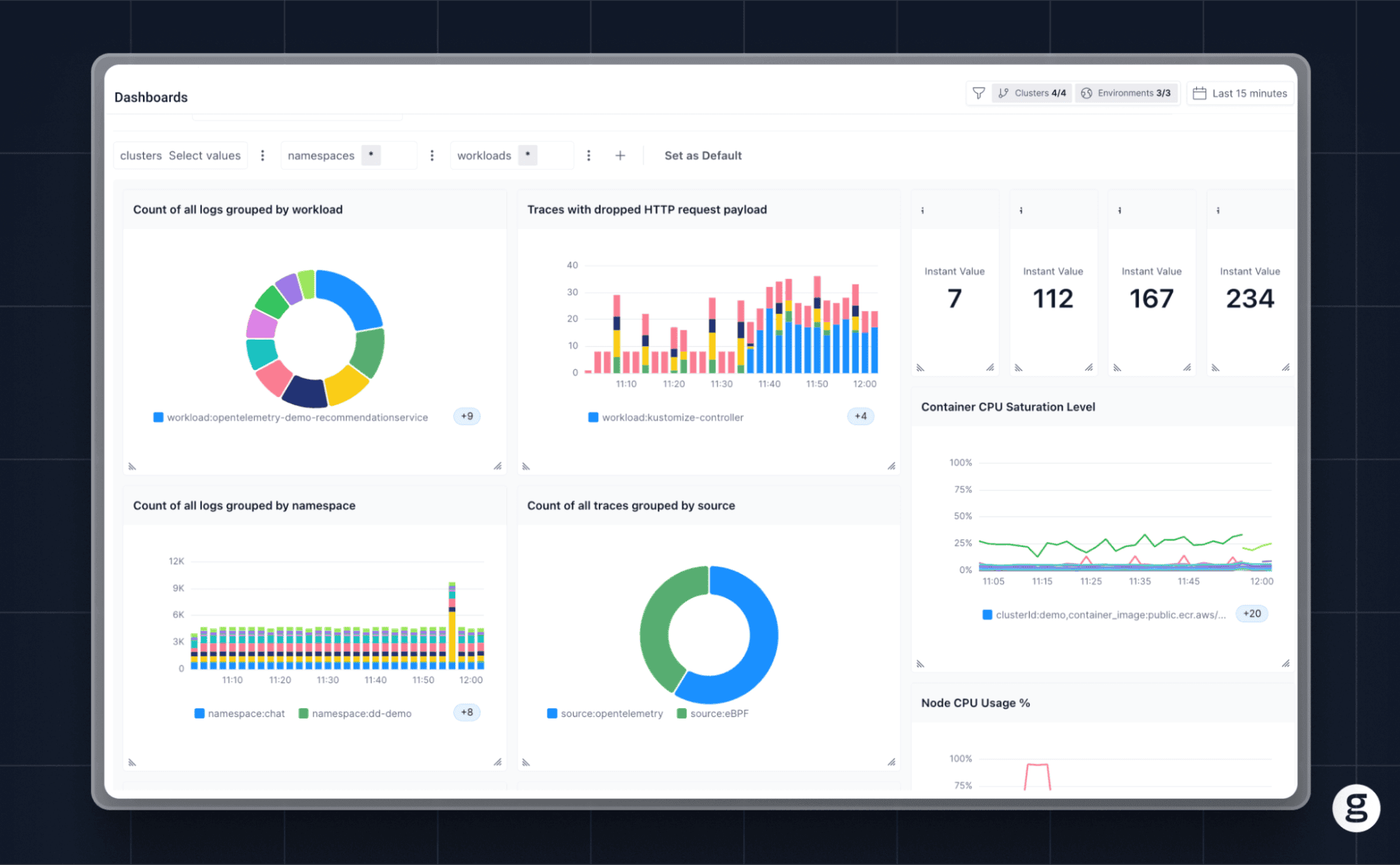
As a comprehensive runtime observability platform capable of capturing every data point from every Kubernetes resource, groundcover provides the visibility teams need to assess and prioritize vulnerabilities effectively. Just as important, groundcover helps track workload performance before and after remediation, allowing engineers to confirm that security mitigations haven’t triggered problems like higher application latency.
e
Making vulnerability scans a part of your Kubernetes strategy
No organization wants to find out about vulnerabilities in Kubernetes only after attackers begin exploiting them. Instead, teams must deploy a comprehensive set of vulnerability scanners – coupled with runtime observability capabilities – to get ahead of vulnerable containers, nodes, runtimes and other components before the bad guys take advantage of them.
FAQs
Ideally, vulnerability scanning should be continuous, meaning that any time a new resource is created or the state of an existing resource changes, a new scan occurs. Failing that, scans should occur as frequently as the organization can feasibly achieve. More is better when it comes to Kubernetes security scans.
Image scanning analyzes static code for vulnerabilities. In contrast, runtime vulnerability scanning and monitoring assess live applications and hosting environments for risks. Since each approach uses different techniques and can discover risks in different ways, it’s best to combine them to achieve the greatest possible security coverage.
By continuously monitoring the status of every resource in Kubernetes, groundcover helps organizations achieve the ongoing, real-time visibility they need to detect and contextualize unusual behaviors that could be a sign of a breach. It also helps teams make informed decisions about which risks to prioritize, and to understand how workload performance may change following remediation.