Introducing groundcover Investigations – collaboration ground for your agents and engineers
Meet groundcover Investigations, a shared workspace where engineers and AI agents collaborate, investigate incidents, validate evidence, and resolve issues faster.

Here's what incidents now look like in 2026. A monitor fires and several engineers have each pointed their own Claude or Codex session at it. The thread sits empty until someone’s summary comes back. The processing gap isn’t just annoying and unproductive. It keeps you in the dark at the exact moment you need to know what’s going on.
Twenty minutes later, the summaries start landing in a swarm of verbose, overly confident explanations. One agent is sure it’s the database. Another found a bad deployment. The third checked the database already, ruled it out, and never mentioned it to anyone because nobody asked. Now three people are comparing notes from three private chat sessions, trying to work out who looked at what.
All of that time counts toward MTTR. For the first twenty-plus minutes, nobody can discuss the incident, divide up the work, or tell their manager which directions they’re pursuing, because nobody knows yet. When the investigation is visible while it’s happening, that wait goes away. You can see which hypotheses are open from the first few minutes, steer the agents toward the right one, and give real answers about where things stand long before anyone writes a summary. That’s how you bring MTTR down: the work gets visible earlier and people can collaborate on it sooner, not just by making each agent faster.
The problem isn't a shortage of agents
Agents are everywhere now. Your coding agent can read the service code. Your observability agent can query traces and logs. The teammate who loves tinkering built a custom one last Thursday. Each of them is good at its slice of the job.
What's missing is the shared record and a place for cross collaboration. When an investigation lives inside five separate agent sessions, you lose the things that make an investigation useful:
- What's been checked. If one agent ruled out the database, everyone else should know that before burning tokens and time on it again.
- What's still open. A hypothesis nobody followed up on isn't refuted. It's forgotten.
- Why does anyone believe in anything. A confident summary with no evidence behind it is a guess dressed up nicely.
When we built our first internal prototype, we pointed a coding agent at a real issue and let it spawn sub-agents to dig in. It did solid work. But a lot of that work happened inside conversations inside the agent's own harness. But a lot of the back-and-forth between those sub-agents stayed inside that one agent session. It never made it into a shared record, so the rest of us couldn’t review how it reached its conclusion. We got the answer without most of the reasoning.
All of this is the gap groundcover Investigations fills.
What groundcover Investigations is
groundcover Investigations is a shared place to hold an investigation where you can see one agreed-upon record that humans and agents both work against.
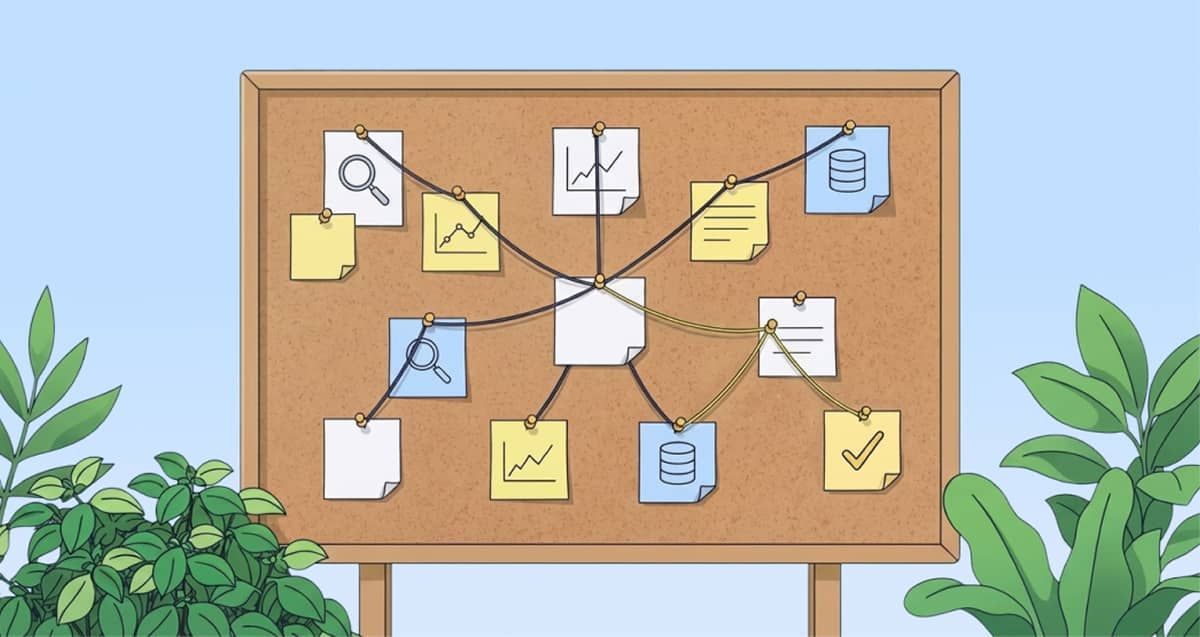
An investigation starts from a question, usually a firing monitor issue. "Why is checkout latency spiking in us-east?" From there it grows into a tree:
- Hypotheses are the possible explanations. "A connection pool is exhausted." "The 2:05 deploy introduced a slow query."
- Findings are the evidence. Queries that were run, what they returned, when and where something happened.
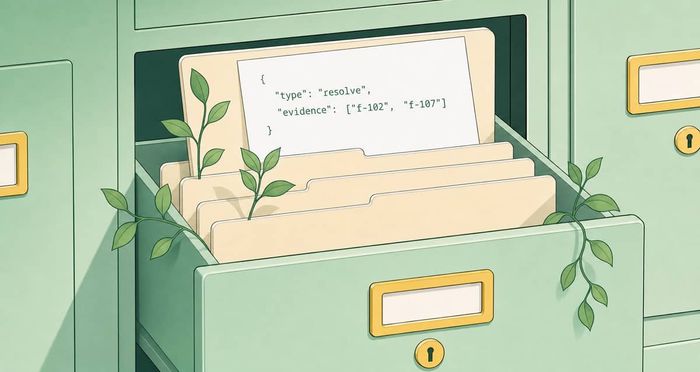
- Assessments are the verdict on each hypothesis. Supported, refuted, or still open, along with the findings that back it up.
Two groundcover agents keep the tree moving. The moderator runs on every investigation. It’s an LLM-as-a-judge that holds the work to a consistent standard, and for example it accepts a conclusion only when the findings support it. The investigator does the research. It proposes hypotheses, queries your telemetry and publishes findings, and it can take an investigation from the first alert to the root cause on its own. It’s also optional. If you’d rather have your own agents run the investigation, or work alongside ours, they can, and the moderator holds them to the same standard. groundcover Investigations posts progress updates to the incident’s Slack thread, and the full tree stays in groundcover. We’ll cover the moderator, the investigator and Slack in more detail later in this post.
Anyone can contribute. That includes the people on call, groundcover's own agents, and your coding agents, which connect over MCP at 0 added effort! Our mcp instructions and tools explain to external agents exactly how to work with an investigation. Every contribution is attributed. You can see that a finding came from a specific person's Claude session, acting on their behalf, at a specific time.
Because it's structured rather than a transcript, you can open an investigation and read its graph state in seconds. Three hypotheses, two refuted, one supported by four findings. You don't have to scroll through 40 messages to reconstruct that. This also helps when looking up past investigations to learn from what has already been previously found.
The investigator and the moderator
Two groundcover agents keep an investigation moving.
The investigator does the research. It reads the issue, proposes hypotheses, queries your telemetry, and publishes findings and assessments into the tree. It can split work into sub-investigations when one branch gets big enough to deserve its own focus.
The moderator keeps the investigation honest. Its job is to make sure nothing gets closed on confidence alone. If an investigator, or your coding agent, proposes that a hypothesis is supported, the moderator checks whether the evidence actually supports the claim. No findings, no closure. Only the moderator can mark something resolved, which means an overeager agent can't declare victory and walk away.
That separation matters more than it sounds. Agents are fast, and they're often confident in ways the data doesn't justify. Having one role that does the work and another that grades it gives you a result you can trust without re-checking every step yourself.
We'll go much deeper on how the two work together in the next post.
We're not replacing Slack
Your team already lives in Slack during incidents, and we have no interest in dragging them out of it. Everything that happens in an investigation can show up in the Slack thread, and what people add in Slack flows back into the investigation. Meeting people where they already work is the whole point.
But we learned that an investigation produces a lot of output. A Slack thread doesn't provide a good experience for reviewing every evidence, hypothesis, assessment, and branch of the tree. The output was technically complete, but practically useless. Nobody on call wants to scroll through 30 findings to figure out whether the investigation is on the right track.
So we split the two jobs.
Slack is for progress. It gets the updates that help on-call decide what to do next. A new hypothesis is opened. A hypothesis is supported or refuted, with a short assessment explaining why. A conclusion lands. Enough to tell you whether things are heading the right way, so you're not staring at an empty thread waiting for someone's agent to finish.
groundcover Investigations is for depth. When you want to see the full tree, the exact queries behind a finding with visualizations that help us humans understand large quantities of data, or why a hypothesis got refuted, you click through and it's all there. Nothing is summarized away. It's just not shoved into a chat thread.
Why one shared place matters
Incidents used to be a group activity. People called out what they were checking, someone kept notes, and the team built a picture together. Now engineers start their own agent session the shared picture disappears.
A single agreed-upon record brings it back. The humans on call become active participants again. They can steer, challenge a hypothesis, or add context the agents don't have, instead of waiting on a summary. And every agent works from the same facts instead of rediscovering them.
What's next
Right now you can start an investigation from a monitor issue in groundcover or from Slack. Next up is automating this flow. You define which monitor issues matter most, and groundcover starts an investigation the moment one fires, so the on-call engineer opens the thread to find work already underway instead of an empty room. If you want to see where this is going or tell us what your incident threads look like today, I encourage you to join our community Slack and ask any questions you may have. I also encourage you to give groundcover a try with our playground.