Agent Mode Connectors: How to Extend AI Observability
Discover Agent Mode Connectors for AI observability. Connect Slack, Jira, and Linear to investigate incidents with full telemetry context.
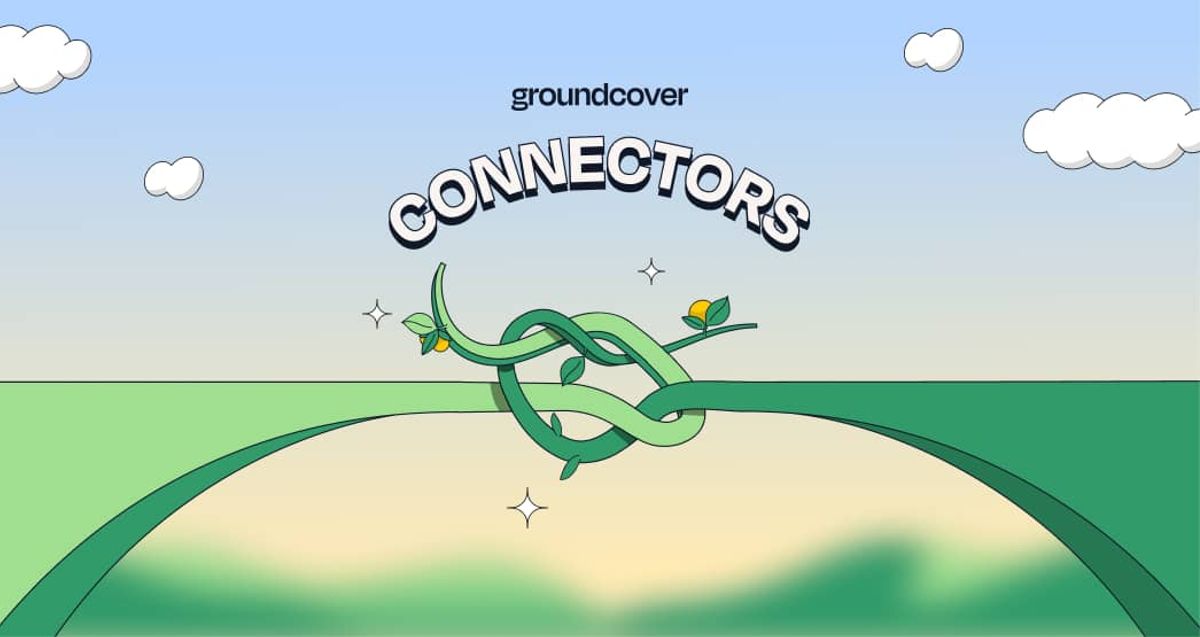

New employees eventually run into a wall where they need to do something specific in their new job, but are missing background information. Agents are similar to new employees, but even worse at inferring from missing context. This major release expands the data available to groundcover Agent Mode so it can avoid the “knowledge wall” altogether, extends the reach of its observability agents to other tools, and then uses custom skills to deliver repeatable behavior that users need from their agents.
Connectors and custom skills extend Agent Mode into the tools where your team already works
The problem this launch solves is so widely written about now that it has become a truism: agents are only as good as their context. That’s the case whether the agents are for coding, or monitoring, or incident management. They all run into the same wall, or ceiling or choose your metaphor, and that’s where many teams hit friction. It’s rarely the case that the data agents need isn’t findable. More often than not it’s just siloed or too expensive to keep.
As an example, telemetry data may exist in an observability platform, but it stays disconnected from the places where engineers and their agents collaborate, discuss issues, investigate them, and make decisions. One tab each for Slack, Linear, Jira, groundcover, and Cursor or Claude. That creates a familiar workflow problem: devs and SRE’s switch between observability, chat, ticketing, and development tools just to keep the thread together.
This launch is about making Agent Mode more useful where real work happens: inside the flow of investigation, collaboration, and decision-making. With connectors, groundcover Agent Mode is supercharged in that it has access to the tools teams already use in that lifecycle.
Alongside connectors, we’ve continued expanding the ability for users to guide agents through custom skills. Now you can directly guide agent behavior to follow procedures you know it should follow. That matters because useful agent behavior is not just about accessing data — it’s also about reflecting how teams actually work. Processes, conventions, investigation habits, and internal guidance all make the output more relevant and more consistent. Consistency is critical for enterprise platform teams.
Put together, that means Agent Mode is moving beyond simple prompting toward more structured, context-aware investigation workflows. The product work behind this launch focuses on making it easier to connect tools, guide agent behavior, and support richer analysis around observability use cases.
The scale advantage (why BYOC changes what the agent can do)
Most observability platforms can’t build this because they fundamentally have the wrong architecture. For example, MCP connectors and integrations into SaaS observability platforms don’t work. They might function, but they fall over quickly when it comes to privacy, security, and scale. By comparison, Agent Mode Connectors can extend high-fidelity data into context at scale because of groundcover’s Bring Your Own Cloud (BYOC)-first approach.
groundcover customers running with BYOC and node-based pricing aren’t forced into the same tradeoffs that define much of the rest of the market. No "we can only afford to keep 10% of spans." They don’t have to choose which services get full visibility, which teams can afford deeper retention, or whether to keep only a fraction of their spans. They can collect broadly, keep fidelity high, and treat telemetry as a complete system of record instead of a constrained sample. So groundcover Agent Mode now understands, because it has the data to reason from — not a summary of a summary.
That changes what Agent Mode can actually do, and no other observability vendor can offer that. Their customers are on metered, cloud-hosted pipelines where collecting everything is cost-prohibitive. groundcover users already designed their observability for scale.
What "supercharged" actually means in practice (connectors + bidirectional flow)
What does this new capability look like? Picture a user that receives an alert in a channel tied to an application or service their team has built. Maybe it’s a service for ordering BBQ supplies and the fourth of July is coming up, so the team has been working on additions.
The team receives an alert in a shared channel for their ordering service. A user sees it and responds in a Slack thread with “@groundcover please analyze the error codes in order-service.” With this new connector, groundcover Agent Mode starts with the pull. It reads the Slack thread, can pull in the Linear ticket that explains the changes the team has been working on, and already has rich context. Agent Mode also has access to tools, and in this case a trace analyzer runs a deep investigation of all error codes in order-service.
“External payment provider (/v1/charges) is returning 503 Service Unavailable — errors firing ~1/sec right now. The cascade is: orders-service (500) → payments-service (502) → external provider (503)”
Agent Mode then consults its custom skill that reflects the processes their team actually uses, instead of a generic flow, and starts the push. It writes the PR in Cursor, creates the Linear task, updates the Incident.io timeline, files the Jira ticket.
Guardrails - powerful agents need real controls
groundcover customers chose BYOC because of its commercial benefits, but also because it protects sensitive telemetry and LLM data. It stands to reason that they deserve an agentic experience with governance designed to protect that data too. That’s why this launch extends the impact of Agent Mode to the rest of your ecosystem with strict control.
Some of those critical guardrails include:
- Admins keep control over tools and connectors: Policies define which agent tools and connector-backed tools their teams have access to. User-specific rules drive consistency.
- Strong identity and attribution controls: Agent Mode resolves user-specific requests and and uses connector tools with actions mapped cleanly to authenticated users.
- Governed organizational and user-level instructions: Custom Agent Mode instructions expand the guidance over how agents behave across users and environments.
The top of this blog compared agents to new employees because they don’t have enough context. Guardrails deliver a similar, except they’re critical because these new virtual employees don’t yet understand what they can and can’t safely do on their own. The guardrails are the reason enterprise teams can actually deploy this, and why groundcover built them before shipping the connectors.
The ecosystem + availability
Overall, this is less about adding one isolated feature and more about making observability more operational inside the workflows teams already rely on. Whether it’s Claude Code, Codex, Cursor, Slack, Linear, Jira, PagerDuty, Incident.io, or LaunchDarkly. Remote MCP support means the list extends as new tools become more important. The goal is not just to expose telemetry, but to make it more usable in investigation, collaboration, and follow-through.
This launch also sits alongside a broader set of platform improvements focused on three practical customer outcomes: easier dashboards, smoother migrations, and more trustworthy monitors.
On the dashboards side, we invested in time-series usability and chart behavior so teams can get clearer visual output and better controls when exploring data. On the migrations side, we continued improving the migration experience so more content can move over cleanly and with less manual cleanup. And on the monitors side, we focused on reliability: helping prevent faulty monitors from being created, making monitor issues easier to surface, and improving the information available when something goes wrong.
That combination matters because observability is most valuable when it helps teams move from signal to understanding to action with less friction. Connectors extend where that work can happen. Skills and instructions make agent behavior more adaptable. And the accompanying platform work makes the surrounding product more reliable and easier to use.
Try connectors in groundcover and see how Agent Mode can fit more naturally into the way your team already works. Start for free and build an observability workflow that’s closer to the tools, context, and decisions that matter day to day.