Opening groundcover on Duo and looking at our own mobile RUM
A customer’s experience with groundcover mobile RUM on Duo

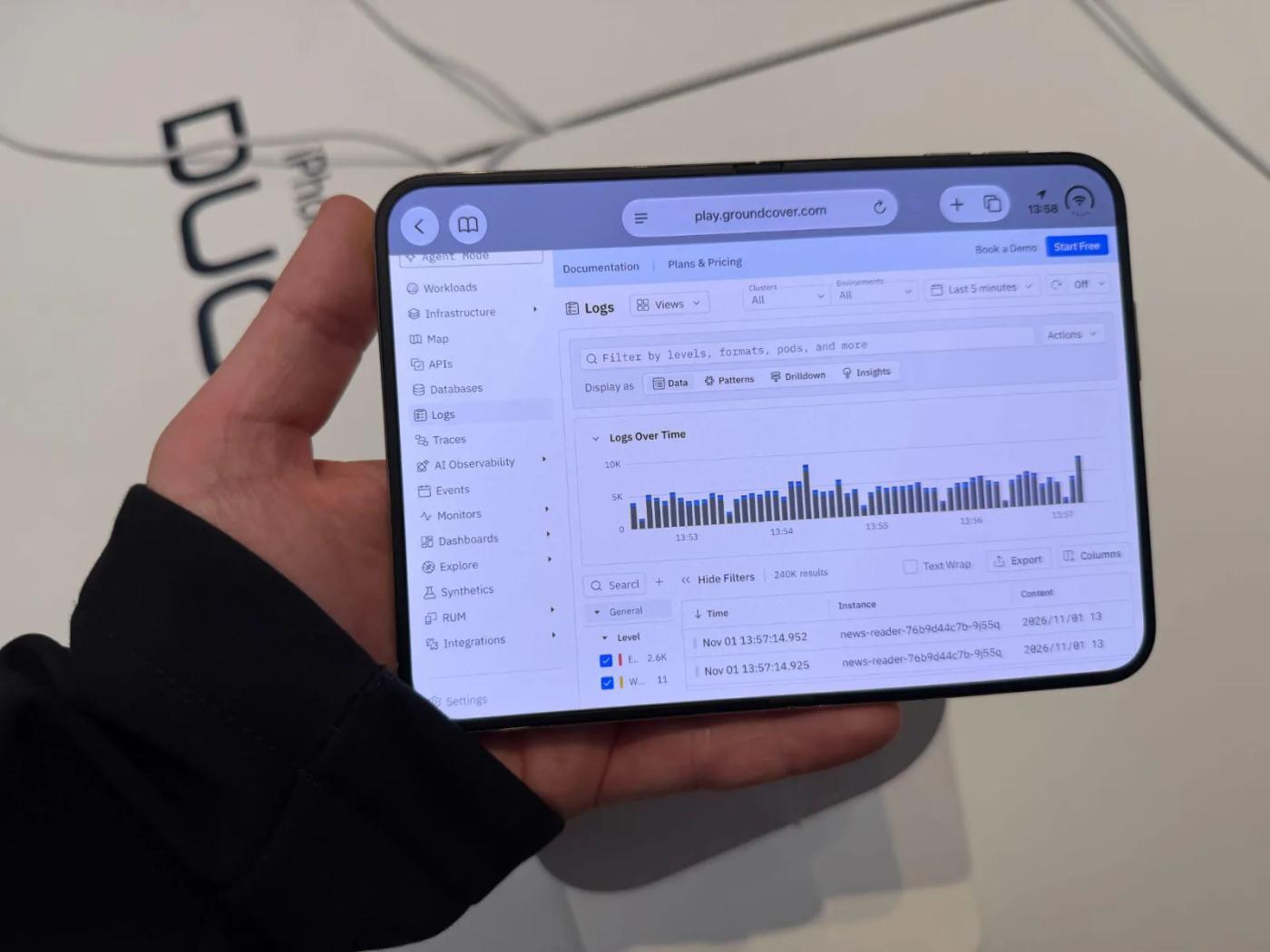
Last weekend, one of our customers walked into an Apple Store, picked up a demo iPhone Duo, and opened groundcover. It worked well — well enough that our Slack lit up within minutes. That small moment touches most of what we've been building lately, so here's the tour: how groundcover looks on a phone today, a small-screen fix that took less than a day, what mobile RUM captures, and how we run it on our own apps first. Start with the phone in the store.
groundcover, in your pocket
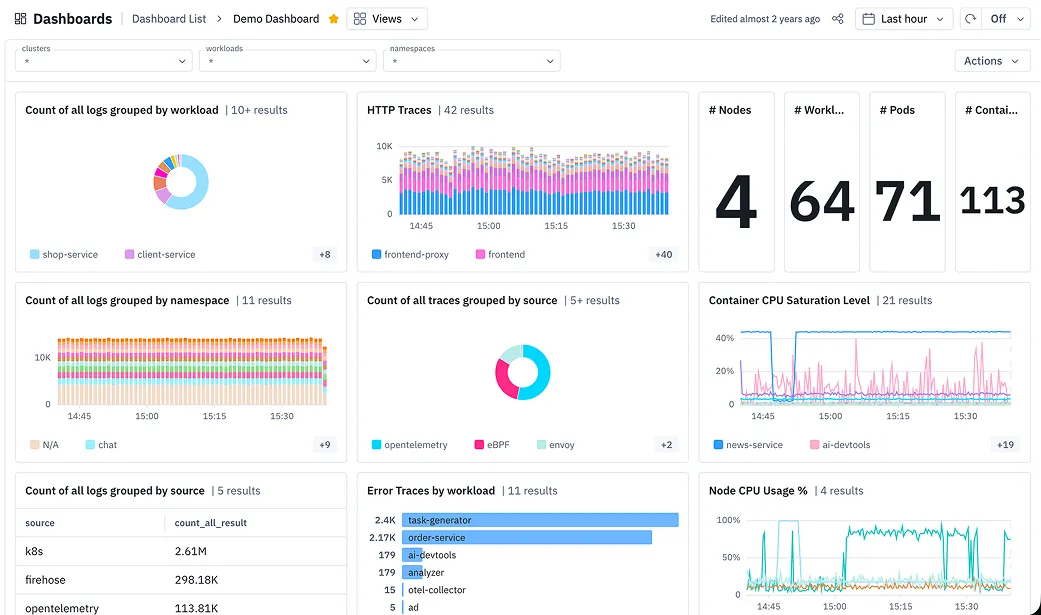
groundcover was built for big monitors, but it holds up on today's phones better than you'd expect. The Duo handled logs, charts and tables without a fight, and a teammate chimed in that it runs just as well on a Samsung Fold. Another teammate reminded everyone of a prediction made the day the Duo launched: finally, a phone big enough for charts and tables. Still, "works well" is a high bar on a small screen, and the team found a rough edge within minutes.
From Slack thread to fix in under a day
That rough edge went from Slack thread to fix in less than a day. Netanel, one of our frontend engineers, thought the toolbar was covering the top of the screen. He asked Linear to open a ticket right in the thread and sent Codex to reproduce it on the iPhone Duo simulator. Verdict: not a bug, just the sidebar scrolled out of view. He fixed it anyway. The logo and agent now stay pinned to the top of the sidebar, settings to the bottom, and only the middle scrolls. The "over time" charts start collapsed on screens 650px tall or shorter, and groundcover remembers if you open them. The ticket closed the next morning. Making groundcover work on your phone is half the story, though — the other half is seeing what your users do on theirs.
What mobile RUM sees
That's the job of mobile RUM in groundcover, which gives app teams the same view of real user sessions that web teams already get. Add @groundcover/react-native and every session shows up with its screens, taps, logs and network calls, each request linked to the backend trace that handled it. Crashes, ANRs and hangs land in Exceptions, while Vitals tracks slow frames, frozen frames and app start per screen. Mobile RUM has been open to all users since October, and the Flutter package is now a release candidate on pub.dev with the same signals and UI. We weren't going to ship any of it without using it ourselves, though.
We're our own first mobile customer
Our own mobile apps are the first place the SDK runs. The Swag app is a React Native groundcover merch shop on TestFlight. Every 12 hours, scripted shoppers run it through a clean checkout, a flaky connection and a failed checkout, and every request traces through to its backend. The native groundcover app for iOS and Android is built on our own React Native SDK too. Living on it caught problems before customers did: Hermes source maps weren't resolving stack frames, and native crash stack traces were getting dropped. Both are fixed. That loop of using it, breaking it and fixing it is the same one that played out with the iPhone Duo.
This same loop is a preview of where we envision the on-call experience is headed for groundcover users. You open the groundcover app on your phone after receiving a monitor notification,, run the investigation right there, and pull teammates and a coding agent into a Slack thread. The agent can reproduce the issue and open a PR while the humans decide whether to ship it — the same way the iPhone Duo fix happened. Pair that with the AI observability we’re about to release, built around using llm evals to spur product feature development, and you see which feature broke and who it hit, not just which service looks unhappy. It’s a small example of how we’re trying to close the loop between shipping code and fixing it. Infrastructure monitoring, the monitors and investigations that run on that data, RUM, and AI Observability and evals all feed one accurate picture of your system from every angle. That means you can make the changes from wherever you already work, whether that’s at your desk or on your phone, in your coding agent or in Slack, or in the groundcover app or another autonomous developer tool.
Final thoughts–bring your phone
Finding that groundcover already works on a phone in an Apple Store is a nice moment. However, watching the team turn its one rough edge into a fix by the next morning is the real story here.. We build the tool, then we're its first users — on the web, and now on mobile. If you ship a React Native or Flutter app, add @groundcover/react-native or groundcover_rum and see your users' sessions right next to the backend traces that served them.