RAG Observability: Key Metrics, Challenges & Best Practices



Retrieval-augmented generation (RAG) - which can enhance AI model performance by connecting models with additional data sources - has become a key technique for many organizations seeking to take full advantage of generative and agentic AI technology. But like any technical process, RAG can be subject to a variety of challenges, which is why observability for RAG is essential for ensuring that RAG actually delivers its intended value.
Read on for details as we walk through what RAG observability means, why it’s important, and how to debug RAG systems effectively.
What is RAG observability?
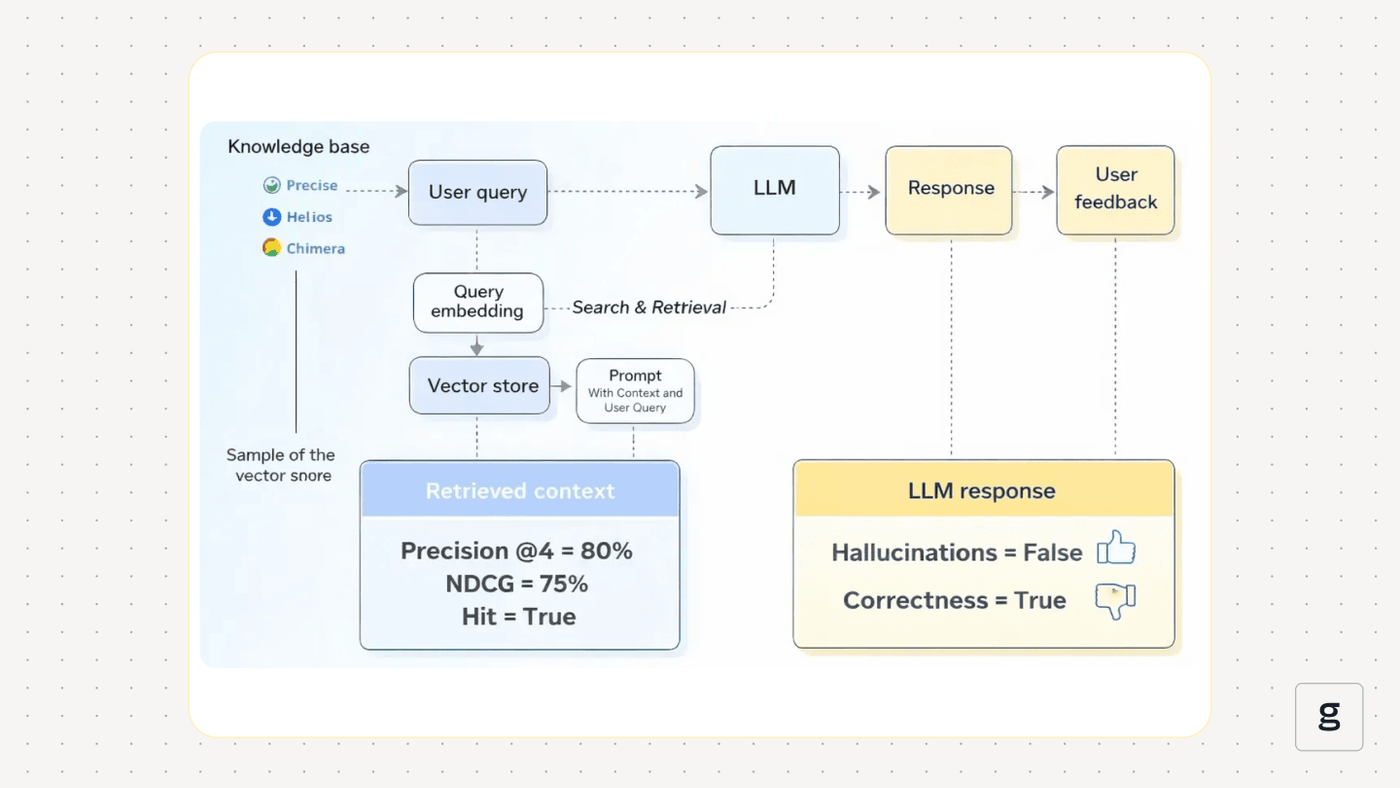
RAG observability is the practice of monitoring and analyzing retrieval-augmented generation (RAG) processes. Specifically, RAG observability assesses components of RAG, such as:
- Which data sources a model accesses through RAG.
- Whether the data sources are relevant to a given prompt.
- How long it takes to fetch the retrieved documents and use them to generate a response.
- Which costs the organization incurred when performing RAG.
Context: Defining RAG
We just gave you a basic definition of RAG observability. But to explain fully what RAG observability means, let’s step back and talk about RAG a bit.
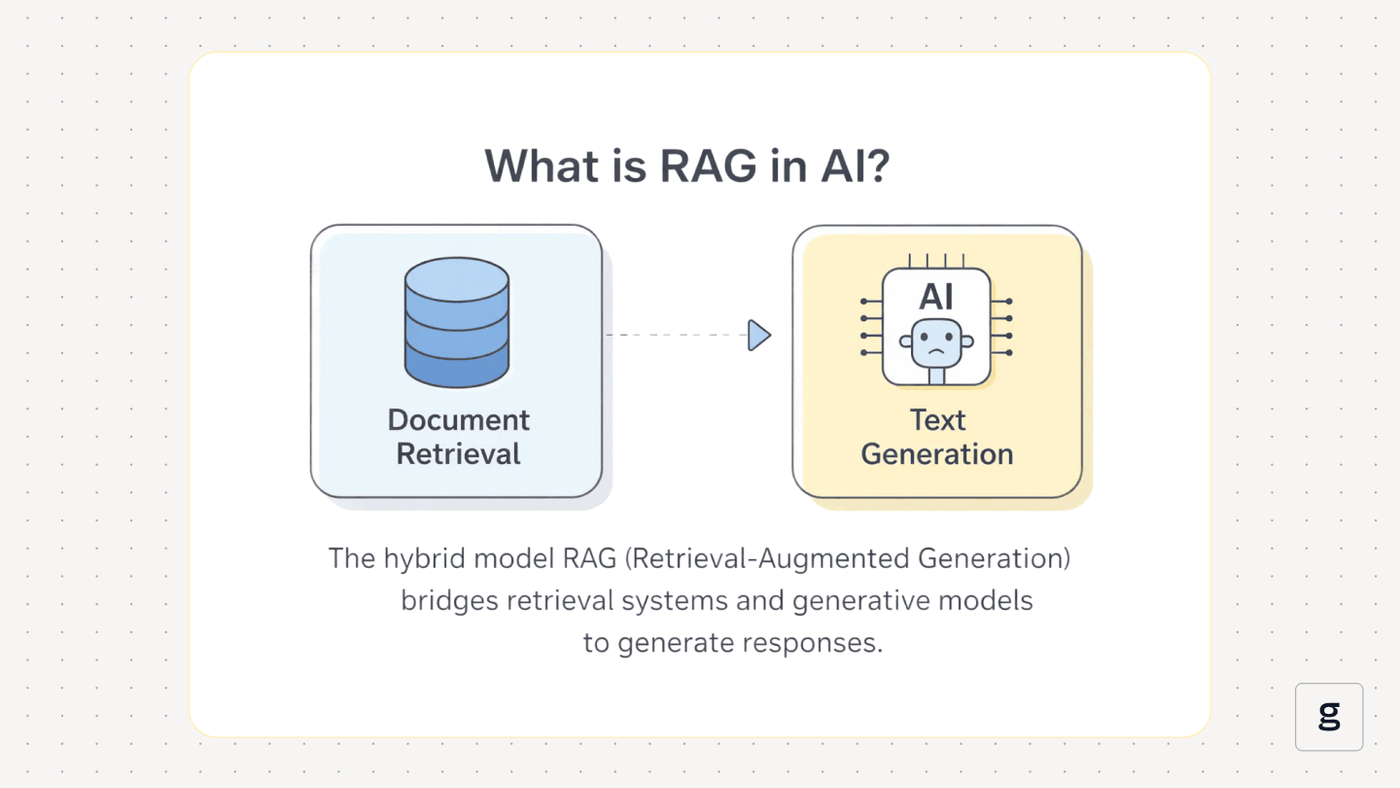
As we mentioned in the intro to this article, retrieval-augmented generation is a technique that allows AI models (specifically, large language models, or LLMs) to access additional data sources. RAG is valuable because it’s a way for models to leverage information that wasn’t included in their training data. Using RAG, models can consider additional data before formulating a response to a prompt.
For example, a company could take a model that was pretrained on generic data and, using RAG, connect the model to a knowledge base that is specific to the organization. That way, the model would have access to information that is unique to the company, in addition to its generic training data. The model would, in turn, be able to produce responses that are tailored to the unique needs and character of the organization, instead of just generating generic answers.
Why does RAG observability matter?
While RAG can be a powerful way to enhance the effectiveness of AI models, there’s no guarantee that RAG processes will work as intended, hence the importance of observing RAG processes to identify issues and pinpoint their root causes.
For example, here’s a look at common RAG challenges that observability helps address:
- A model might pull irrelevant data during RAG and incorporate it into a prompt response. This results in responses that don’t adequately address user needs.
- Due to an inefficient data pipeline design, accessing data through RAG might add many seconds to the overall prompt response process, leading to a poor user experience.
- A model might access an excessive amount of information during RAG. This is problematic because it leads to large “context windows” (which refer to how much data an AI model can process at once). If the retrieved context window gets too big, models may take a long time to generate a response, or fail entirely to create one.
In short, if you want to use RAG to enhance the effectiveness of AI, you need an observability strategy in place to ensure that RAG actually does what you want it to do. There’s no guarantee that simply connecting a model to additional data using RAG will magically make the model perform better, so it’s important to observe what happens during RAG.
How observability works across RAG pipelines
The goal of RAG observability is to detect and help address issues across all stages of the RAG process. To that end, effective observability assesses RAG pipelines (meaning the workflows that AI models use to access external data sources via RAG) from beginning to end.
Key steps in the process include:
- Data preparation: Before RAG data assets are even made available to models, observability tools can analyze the quality of the data, how well it is indexed, and how it is “chunked” (meaning how easily it can be divided into components or segments, which is important for ensuring that models can ingest relevant parts of the data efficiently).
- Data retrieval: Retrieval is the process through which an AI model actually pulls data from an external source. Here, observability focuses on which data the model accesses and how quickly it is able to fetch it. The structure of retrieved data, and its relevance for a given prompt, are also factors to evaluate retrieval quality.
- Augmentation: Augmentation is the process that a model uses to incorporate RAG data into a prompt. The goal of observability during this stage of the pipeline is to validate that the model is able to use the data it has fetched effectively - that it’s actually included in the prompt response, and that the output is clear and complete.
- Response: Finally, observability tools can track how long it takes to send the prompt back to users. The goal here is to ensure that the overall response time is acceptable. The total cost (in terms of tokens, which AI models often use for billing) can also be evaluated.
Key metrics to track for effective RAG observability
The specific data points that a team or organization chooses to monitor during RAG observability may vary depending on its priorities (for example, cost monitoring may be less important for a business that hosts its own models rather than using third-party services that charge on a per-token basis).
But in general, essential RAG observability metrics to monitor as part of a RAG evaluation dataset include:
- Latency: Latency measures how long each major stage of the RAG process (data retrieval augmentation and response delivery) takes. This is a simple quantitative metric that can be tracked in seconds or milliseconds.
- Relevance: Relevance assesses the answer quality and accuracy of a RAG-enhanced response. While this metric can be somewhat subjective, one way to automate and quantify it is to use another AI model to evaluate responses and assign them a score - an approach sometimes called LLM-as-a-Judge, because one LLM assesses the responses of another.
- Token usage: This metric tracks how many tokens (meaning units of data) a model uses to interpret prompts and generate responses. While token usage will typically vary depending on the complexity of prompts (longer or more complex queries usually mean more tokens), it’s important to identify situations where models use an unusually large number of tokens, since this can slow down responses and increase costs.
- Cost: Cost metrics monitor the total cost of generating and delivering responses using RAG. They are usually tied closely to token usage (because, again, AI model service providers usually bill customers based on how many tokens they use). But additional cost factors to consider include storage costs for RAG data and the compute and networking costs of making the data accessible to models.
Resource utilization: Speaking of compute and networking usage, it’s helpful to monitor these and other resource utilization metrics as part of RAG observability. If RAG places a heavy load on servers, the overall speed of the RAG process may decrease because there won’t be enough resources to process requests quickly. At extreme rates of resource utilization, overall system reliability could be in jeopardy because systems could crash.
| Metric | Purpose |
|---|---|
| Latency | Measure how long RAG processes take to complete. |
| Relevance | Assess the answer quality and completeness of prompt responses. |
| Token usage | Count the total number of tokens used by models during RAG. |
| Cost | Monitor the cost of RAG processes. |
| Resource utilization | Track the resource consumption levels of servers that support RAG. |
Debugging RAG systems with observability data
While collecting RAG observability data is a first step, the data is only useful if you can use it to debug RAG applications and systems effectively. There are often no clear-cut or consistent playbooks to follow in this regard because RAG systems can be subject to a wide variety of challenges, and engineers often have to think creatively to debug them.
That said, the general RAG debugging process typically involves:
- Identifying anomalies: Based on RAG observability data monitoring, teams detect anomalies - like a sudden increase in latency rates for response generation.
- Correlating data: Engineers then correlate the anomalous data with other data points, such as resource utilization rates.
- Root cause identification: Based on all available data, teams can infer what the root cause of the problem likely is. For instance, if response latency and resource utilization rates spike at the same time, the problem is probably that low resource availability is slowing down the speed at which models can generate responses because the models don’t have enough free CPU.
- Remediation: Finally, engineers take steps to resolve the problem. If low resource availability is the root cause, for example, they could scale up their infrastructure. Alternatively, they could switch to a new model that consumes fewer resources. Either approach should help resolve the problem they originally identified of high latency rates.
RAG observability in multi-service and Kubernetes environments
RAG observability is complicated enough when you’re dealing with a simple model deployment architecture in which a model and RAG data sources reside on the same server. But it becomes even more challenging in multi-service or distributed environments, like Kubernetes clusters. There, you have more variables to contend with, as well as a broader range of Kubernetes observability data points to collect and analyze. For example, rather than just monitoring resource utilization for servers, you’d also have to track it for Pods and containers that host AI models.
This can all be done, but only with an approach that combines best practices for observability in complex, distributed environments with RAG observability.
Common challenges in implementing RAG observability
We just mentioned how RAG observability can prove particularly challenging in complex hosting environments. But that’s not the only pain point you may encounter when observing RAG. Other common challenges include:
- Relevance subjectivity: Determining what counts as a high-quality response can be subjective. As we mentioned, it’s possible to use LLMs to judge one another’s responses, but even then, organizations must clearly define criteria for what a response should include to qualify as “good” and “relevant.”
- Lack of built-in tooling: Most AI models include no built-in observability tooling. Measuring metrics like latency and response utilization requires the use of external software that can track data from outside models.
- Limited transparency: Models also typically offer few, if any, abilities to “explain” why they formulated a response in the way they did, or why they selected certain RAG-retrieved documents, for instance. The best teams can do is make informed inferences about AI system behavior based on observability metrics available to them.
| Challenge | Description |
|---|---|
| Relevance subjectivity | What counts as a relevant and quality response can be subjective. |
| Lack of observability tooling in models | Models lack built-in tooling for collecting observability data. |
| Limited transparency | Models usually don’t document why they generate responses in the way they do. |
Best practices for scalable RAG observability
To mitigate challenges like those described above, consider the following RAG observability best practices:
- Start with data quality: If you connect a model to low-quality data sources through RAG, you’re likely to end up with slow and costly outcomes because your model will struggle to use the RAG data effectively. For that reason, invest early-on in making sure your RAG data is clean, accurate, and complete.
- Take an end-to-end approach: Above, we emphasized the importance of monitoring all stages of the RAG pipeline, and we’re saying it again: RAG observability is only effective if you know what’s happening across all parts of the process.
- Correlate, correlate, correlate: Data correlation and contextualization are especially critical for RAG observability. They help make up for the lack of inherent transparency and explainability in AI models: A model won’t directly tell you why it did whatever it did, but you can use data correlation to make an informed guess.
- Automate using LLMs: Using LLMs to assess RAG output presents certain challenges (such as increased costs because you have to pay for the LLM that assesses another LLM’s output), but it’s really the only way to perform RAG observability at scale. Manual review of RAG responses takes too long to enable scalability.
RAG observability tools and where they fall short
Currently, the RAG observability tool landscape remains immature. Relatively few observability tools exist that cater to the needs of RAG alone, and many that do focus on data collection more than analysis and actionability. Plus, even if these tools become more powerful over time, their focus on RAG observability alone makes them challenging to use as end-to-end observability solutions that provide visibility into all aspects of system performance, not just RAG pipelines.
The good news is that it’s possible to use traditional observability tools - those designed for infrastructure or application monitoring - to observe RAG pipelines, too. A good observability tool will excel at tasks like monitoring latency and resource utilization.
When paired with techniques that address the unique dimensions of RAG observability (such as using LLMs to judge other LLM output), modern observability platforms enable effective monitoring of RAG pipelines alongside all other components of your software stack.
Unified RAG observability across distributed services with groundcover
Modern observability is where solutions like groundcover come in. By continuously and comprehensively observing all components and processes within a RAG pipeline - from underlying servers or Pods that host AI models, to databases that house RAG documents, to the application services that fetch data and deliver responses - groundcover provides the critical context necessary to identify and troubleshoot RAG performance issues.
A strategic approach to RAG observability
RAG is an amazing way to increase the impact of AI models, but a RAG pipeline is only as effective as it is observable. Without the ability to understand exactly what’s happening during each stage of the RAG process, identify anomalies and remediate root causes, organizations end up shooting in the dark.
Fortunately, it doesn’t have to be that way. Effective observability solutions exist for RAG, and any team hoping to use RAG to maximum impact should make RAG observability a core part of its broader RAG and AI strategy.
FAQs
Traditional LLM observability focuses on monitoring the performance of AI models that generate responses without using RAG. In contrast, RAG observability evaluates the performance of the RAG process and the quality of prompt responses that models formulate using RAG, a technique that models can use to incorporate additional data into responses.
RAG pipelines are difficult to monitor largely because AI models and pipelines include few built-in tools for collecting or assessing RAG data. Models also lack native transparency or explainability for determining exactly how they selected RAG data and used it to formulate a response. However, by collecting observability data using tools that monitor RAG pipelines from the outside, it’s possible to detect RAG performance anomalies and infer how RAG operations affect prompt responses.
As an observability solution that can collect virtually any type of data from complex, distributed environments, groundcover makes it possible to monitor the status and performance of all infrastructure components and software services involved in the RAG process. It also makes it easy to correlate this data, which in turn enables faster identification of RAG performance issues and root cause analysis.